Excellent question and one which I have wondered about for years since ambiguity shouldn’t exist in mathematics. In short, I just denote these as $\Bbb{Z}^+,\Bbb{Z}^{\geq}$.
However, it really depends on context. For instance in set theory,
$$\Bbb{N}=\{0,1,2,…\}.$$
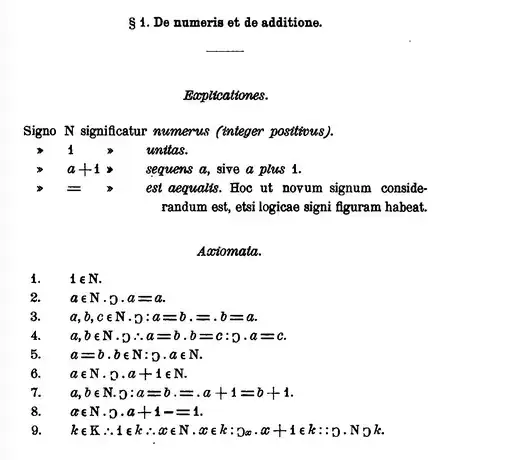
This is so that you can inductively or recursively define all the naturals and you include the empty set. If you’re studying analysis, typically
$$\Bbb{N}=\{1,2,3,…\}.$$
Or equivalently one could write $\Bbb{Z}^+$ for $1,2,…$ since $0$ is neither positive nor negative.
I myself am an educator and in the field when dealing with grade school children their textbooks define the naturals as starting with $1$ and the whole numbers, you guessed it, denoted $\Bbb{W}$, as the set of naturals starting at zero. Where they always remind them zero is a whole number because it has a hole in it. This is a crucial point to bring up as many of us have children who go crazy when the math isn’t mathing.
To avoid confusion I say we put
$$\Bbb{Z}^+=\{1,2,3,...\}$$
For starting at $1$. And
$$\Bbb{Z}^{\geq 0}=\{0,1,2,...\},$$
For starting at zero and call it a day. You have to admit, calling them these two avoids all ambiguity. Or so I like to say “zee plus and zee geque”. Sorry bit of poor math humor there.
I’ll add one thing, depending on your starting place, the answer to infinite sums can be different. And for some sequences you won’t be allowed to plug in say zero so it will begin at $1$. That is,
$$\sum_{n=0}^\infty\frac{1}{2^n}=2,$$
but
$$\sum_{n=1}^\infty\frac{1}{2^n}=1.$$
So if you're finding a sum it really matters but if you're doing measure theory and using an $\frac{\epsilon}{2^n}$ argument it won't matter because $\epsilon>0$ is arbitrary.

 ]
